Finding Calm in the Chaos: Protecting Your Peace When the World Hurts
Witnessing mental health struggles in public can cause our own stress levels to spike. Learn a simple breathing micro-habit to protect your autonomic nervous system from external chaos.
- Category: Breath & Mindset
- Tags:
autonomic-nervous-system,micro-habits
Quick Summary
- The Empathy Trap: Witnessing public distress or aggression often triggers our own “fight or flight” response, unnecessarily spiking our cortisol levels and constricting blood vessels.
- Protect Your Inner Peace: You cannot control the mental health crises of the younger generation, but you must control how your nervous system reacts to witnessing them.
- Do One Thing Different: Instead of tensing your shoulders and absorbing the public anxiety, practice the “Compassionate Exhale”—a deliberate 4-second breath out to ground yourself and maintain physical and mental dignity.
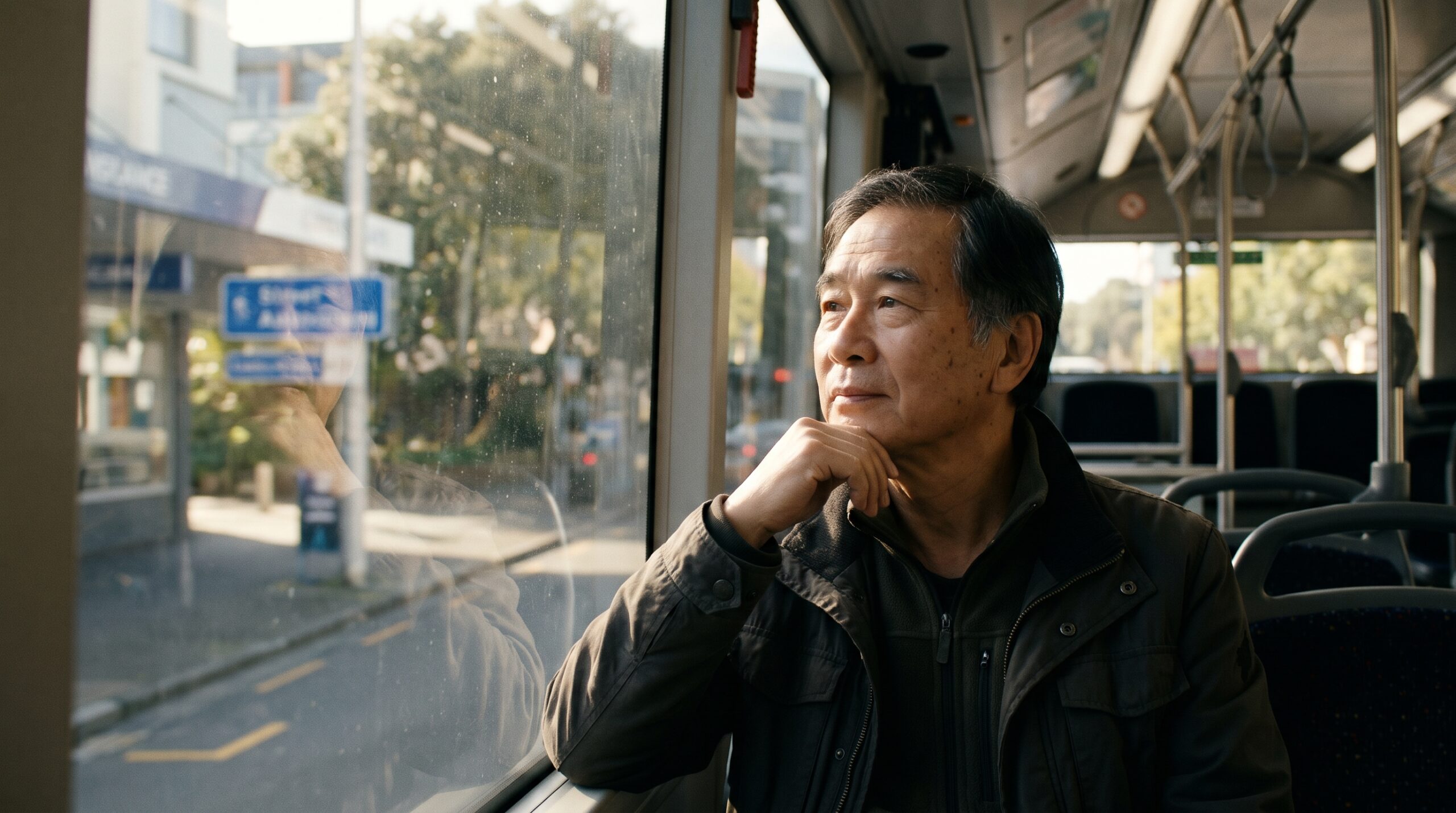
Introduction Driving a city bus in Auckland provides a front-row seat to the full spectrum of human life. Today, a very young man boarded my bus. He didn’t pay the fare; he simply pushed past, yelling and swearing loudly at no one in particular. He sat down, continuously arguing with invisible demons, completely lost in his own fractured mind. It is a heartbreaking sight that is becoming all too common in New Zealand and around the world today—youths losing their mental footing due to modern pressures, alcohol, or substance abuse. Watching his health disintegrate right in front of me, I felt a deep sense of pity. But I also noticed how the entire bus tensed up. When we witness such erratic mental distress, our own physical health is put to the test. How do we navigate a society experiencing so much mental turmoil without letting it destroy our own health and peace of mind?
Section 1: The Root Benefit (Why This Matters After 65)
When you are abruptly exposed to someone else’s aggressive or unstable behavior, your body does not know the difference between a direct physical threat and a tragic social observation. Your sympathetic nervous system automatically flares up. Your heart rate increases, and your breathing becomes shallow. According to Dr. Hideyuki Negoro’s research, this instant stress response severely restricts your capillary blood flow. For seniors, absorbing the anxiety of the modern world accelerates physical aging and weakens the immune system. We cannot cure the deep societal issues of youth mental health on a bus ride, but we are absolutely responsible for shielding our own autonomic nervous system from the collateral damage of a chaotic world.
Section 2: The Micro Habit (The Practical Daily Action)
When you encounter someone struggling loudly in public, your habitual reaction might be to freeze, stare, or tense your muscles in judgment or fear. The micro-habit to build here is the Compassionate Exhale.
- Notice the Tension: The moment you hear the yelling or sense the erratic energy, notice where your body has tightened (usually the neck, shoulders, or jaw).
- The 4-Second Release: Look away gently, close your eyes for a brief moment, and exhale slowly through your nose for 4 solid seconds.
- The Silent Thought: Tell yourself, “That is their storm, not mine. I wish them peace.” This simple exhalation physically forces your parasympathetic nervous system (the “rest and digest” mode) to engage, halting the cortisol spike and keeping your blood pressure stable.
Section 3: Doing One Thing Different (Tips for Sustainability)
To sustain your vitality in an unpredictable world, you must Do One Thing Different with how you process bad news or disturbing sights. We often fall into the habit of complaining about “kids these days” or the decay of society, which only prolongs our own stress response. Change the variable. Instead of holding onto the negative energy and discussing it all day, leave the incident where it happened. Shift your gaze out the window. Focus on the steady rhythm of your own breathing and the posture of your spine. By grounding yourself in your own body, you maintain the dignity and resilience required to age beautifully, regardless of the noise outside.
FAQ
- Q: Does ignoring the situation mean I don’t care about the younger generation’s struggles?
- A: Not at all. Compassion does not require you to destroy your own peace. You can feel deep sympathy for a young person’s mental health struggles without allowing their chaotic energy to deregulate your own nervous system.
- Q: Why is the exhale more important than the inhale here?
- A: When we are startled, we naturally gasp and hold our breath (a sympathetic response). A prolonged, deliberate exhale acts as a biological brake pedal, directly stimulating the vagus nerve to calm the heart and mind.
Conclusion
The world is undeniably complicated, and the mental health challenges facing the younger generation are a heavy burden on society. However, as we navigate our senior years, our primary duty is to cultivate a resilient, peaceful constitution. We cannot heal every broken soul we encounter, but we can offer them silent compassion while keeping our own minds clear and our bodies relaxed. True health is finding that quiet center within yourself, even when the world outside the window feels like it is spinning out of control.
Evidence & References
- Hideyuki Negoro, MD, PhD: The critical role of the parasympathetic nervous system and the prolonged exhale in protecting capillary blood flow from external environmental stressors (Harvard Breathing Techniques).
- Bill O’Hanlon: Modifying our immediate physical reactions (tensing up vs. breathing out) to break the mental habit of absorbing environmental anxiety (Do One Thing Different).