How the Harvard Breathing Micro-Habit Calms Sudden Tension After 65
Sudden stress can easily trigger shallow, panicky breathing in older adults. Learn how the simple Harvard breathing technique instantly resets your nervous system and restores peace of mind.
Tags: harvard-breathing, stress-relief
Quick Summary
- As we age, our autonomic nervous system loses flexibility, making us more prone to sudden tension, shallow chest breathing, and mild hyperventilation.
- The “Harvard breathing” technique (exhaling twice as long as you inhale) acts as a manual override, instantly activating your calming parasympathetic nervous system.
- Practicing this simple breathwork is a zero-effort micro-habit that opens up your capillaries, lowers blood pressure, and stops panic in its tracks.
Introduction
Navigating a heavy city bus through unpredictable Auckland traffic means I occasionally have to hit the brakes hard to avoid a sudden hazard. Years ago, a near-miss like that would leave my chest tight, my heart racing, and my breath shallow and fast for twenty minutes afterward. I noticed that as I got older, it took much longer to calm down from these sudden spikes of tension. We seniors often experience this unexpected shortness of breath—a mild form of hyperventilation—even from simple everyday stresses. That is when I realized I needed a fast, reliable way to take back control of my body.
The Root Benefit (Why This Matters After 65)
According to Dr. Hideyuki Negoro’s principles of Harvard-style breathing, the root of this prolonged panic lies in our autonomic nervous system. In our 60s and beyond, the sympathetic nervous system (our “fight or flight” mode) easily dominates, while the parasympathetic nervous system (our “rest and digest” mode) becomes weaker. When sudden tension hits, we take rapid, shallow breaths into our upper chest, which constricts our capillaries and spikes our blood pressure. By consciously shifting to deep diaphragmatic breathing—specifically, exhaling longer than we inhale—we physically force the parasympathetic nervous system to switch back on. This simple mechanical action dilates the capillaries, sending calming blood flow all the way to our extremities and our brain.
The Micro Habit (The Practical Daily Action)
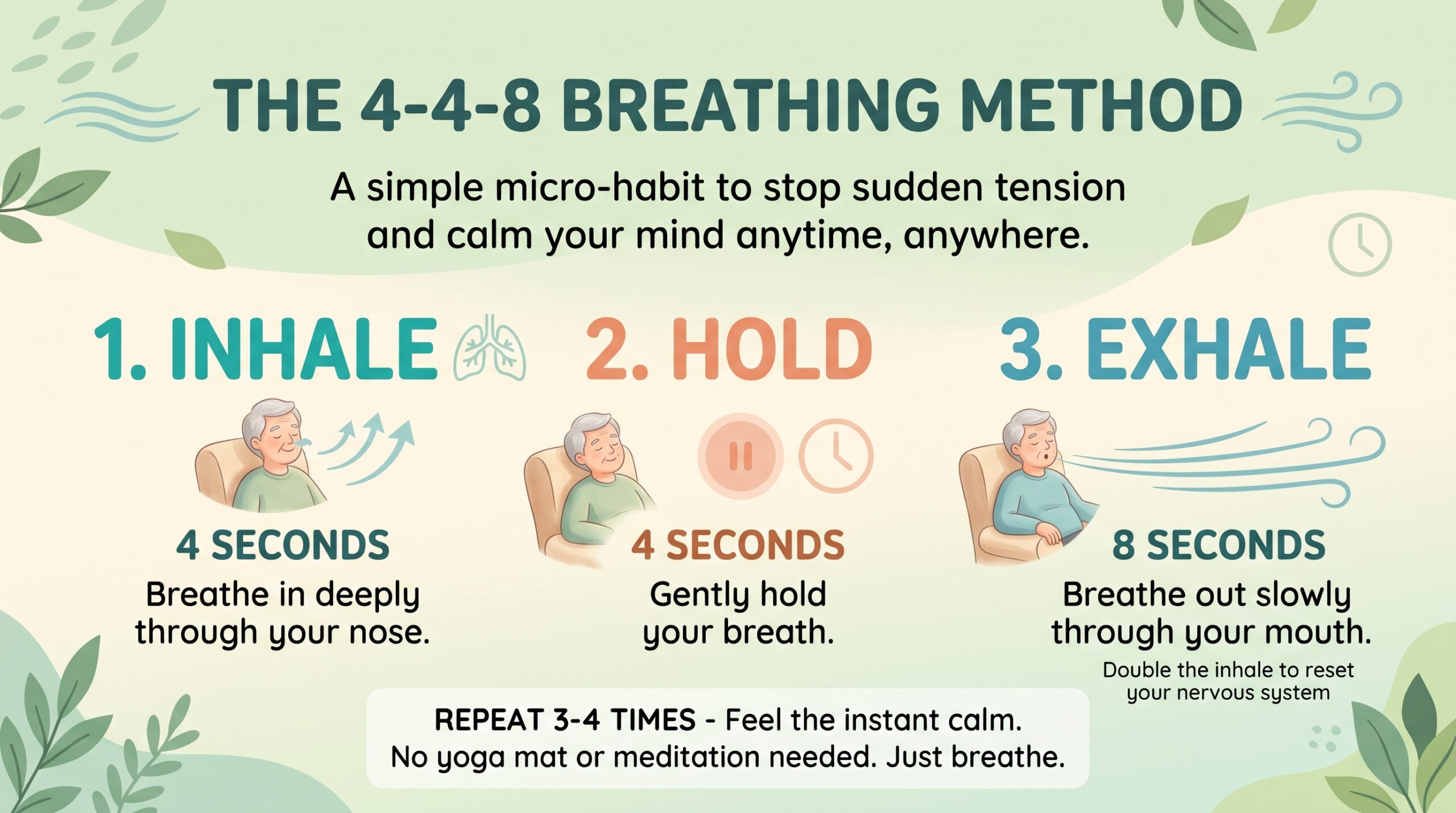
You do not need a yoga mat or an hour of meditation to fix this. The micro-habit is the “4-4-8” breathing rhythm. When you feel that sudden wave of tension or notice your breathing getting fast and shallow, do this one thing: Inhale deeply through your nose for 4 seconds, hold that breath gently for 4 seconds, and then exhale slowly through your mouth for 8 seconds. The key is making the exhale twice as long as the inhale. Just three or four rounds of this will physically stop hyperventilation and clear your mind.
Doing One Thing Different (Tips for Sustainability)
To build a fundamentally healthy constitution, do not wait until you are in a state of panic to practice this. Tie this micro-habit to a frictionless daily trigger. Do one thing different: every time you stop at a red light, or every time you sit in your favorite chair to read, do three rounds of 4-4-8 breathing. By practicing it when you are calm, it becomes an automatic reflex when a sudden, stressful moment actually arrives.
Conclusion
Aging with dignity means having the tools to maintain your own peace of mind, no matter what surprises life throws at you. You cannot control the traffic, the news, or sudden stressful moments, but you have absolute control over your next breath. By mastering this tiny, invisible habit, you protect your nervous system and keep your body grounded, resilient, and calm.
References
- Dr. Hideyuki Negoro – Breathing Techniques for the Autonomic Nervous System (Capillary health and parasympathetic activation).
- BJ Fogg – Tiny Habits (Attaching micro-habits to existing daily triggers).