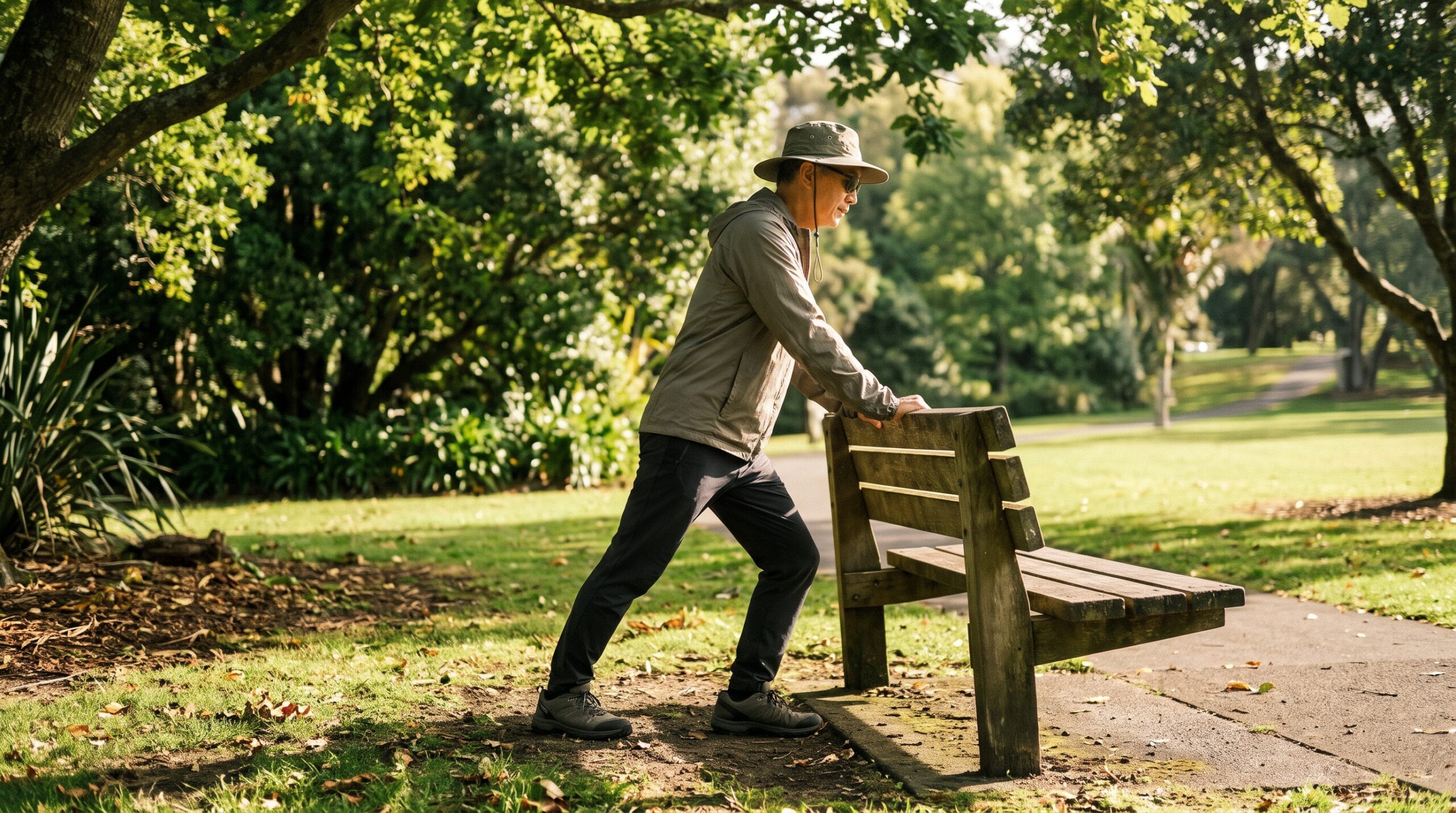
Listen to Pain, Don’t Silence It: Why Daily Movement Beats Passive Care After 65
Even pro soccer players need months of daily rehab to heal. Learn why relying on rest, pills, and weekly walks weakens seniors—and how a 5-minute daily movement habit frees you from pain.
- Category: Daily Posture & Core
- Tags:
daily-movement,active-recovery
Quick Summary
- Pain Is a Message, Not Just a Nuisance:
Silencing aches with painkillers while staying on the couch only masks the warning signal and accelerates muscle loss. - Think Like a Pro Athlete in Rehab:
If young professional soccer players need months of daily physical work to recover, a single weekly walk cannot rebuild a 65+ body. - Adopt the 5-Minute Daily Active Recovery Habit:
Replace passive rest with five minutes of gentle, deliberate movement every single day to restore joint lubrication, blood flow, and strength.
Introduction
Once we pass 65, it is surprisingly easy to fall into a comforting trap. Family members offer to carry our bags, tell us to sit down and rest, and urge us to “take it easy.” Many seniors gladly accept this passive care, gradually shrinking their daily activities while leaning more heavily on clinic visits and painkillers to get through the week.
Whenever I see this, I think of professional soccer players and young athletes. When a 24-year-old athlete tears a muscle or strains a joint, they have an entire team of world-class doctors and physical therapists at their side. Yet even with peak youth and elite medical care, they still need months of consistent, daily rehabilitation exercises just to return to full strength.
Now compare that to how many of us approach aging. We sit most of the week, go for one stroll on Sunday and call it “exercise,” and then walk into a doctor’s office asking for a pill or injection to simply make the ache disappear. If a young athlete cannot heal through rest and medicine alone, how could our 65+ bodies possibly recover without daily movement?
Section 1: The Root Benefit (Why This Matters After 65)
Pain is rarely telling you to stop moving altogether; more often, it is telling you that a joint is stiff, a muscle is underused, or circulation has slowed to a crawl.
When we respond to everyday stiffness by resting more, we trigger a quiet downward spiral. Without daily mechanical stress, muscles shrink, joints lose their natural lubricating fluid, and microscopic capillaries begin to narrow. As Dr. Hideyuki Negoro emphasizes in his work on capillary health and the autonomic nervous system, gentle physical movement paired with steady breathing is what pumps fresh oxygen and nutrients into stiff, aching tissues.
Similarly, Dr. Steven Gundry notes in The Energy Paradox that our cellular energy factories—mitochondria—only stay strong when we ask them to do regular work. Passive care feels kind in the moment, but over time, it quietly steals the very strength you need to live pain-free.
Section 2: The Micro Habit (The Practical Daily Action)
To break free from chronic stiffness and pain, shift your mindset from “waiting to be fixed” to daily active recovery. You do not need an intense workout—you need daily consistency.
Commit to the 5-Minute Daily Active Recovery Routine every morning or afternoon:
- Gentle Joint Wake-Up (2 Minutes): Stand beside a sturdy chair or kitchen counter. Slowly roll your shoulders back, lift your heels for 10 gentle calf raises, and smoothly bend and straighten your knees within a comfortable, pain-free range.
- Deliberate Upright Stride (3 Minutes): Walk steadily around your home, yard, or neighborhood block with your chest lifted and eyes forward. Breathe slowly through your nose as you move.
- Respect the Signal: Move into mild stiffness to warm it up, never into sharp, stabbing pain. The goal is to remind your body every single day that it is still meant to move.
Five minutes every day signals far more healing to your nervous system and joints than one long walk once a week.
Section 3: Doing One Thing Different (Tips for Sustainability)
Changing a habit of passive rest starts with doing just one small thing differently today.
- Politely Decline Unnecessary Help: Carry your own light grocery bag, stand up to fetch your own glass of water, and walk the extra steps from the far end of the parking lot. Small daily efforts are your free physical therapy.
- Pair Movement with an Existing Cue: Do your 5-minute active recovery right after the kettle boils for morning tea or immediately before lunch. Linking it to a fixed routine removes the need for motivation.
- Track Consistency, Not Intensity: Put a simple checkmark on your calendar for every day you complete your five minutes. Just like an athlete in rehab, showing up daily is where real recovery happens.
Frequently Asked Questions (FAQ)
Q1: My knees or back already hurt when I start moving. Won’t daily exercise make the pain worse?
It is important to distinguish between dull stiffness and sharp, acute pain. Mild stiffness usually eases after two or three minutes of gentle warm-up as blood flow and joint fluid increase. If you feel sharp, sudden, or worsening joint pain, stop that specific movement and consult a doctor or physical therapist to find a safe, modified motion you can do daily.
Q2: Is walking once or twice a week really not enough for seniors?
A weekly walk is certainly better than nothing, especially for fresh air and mood. However, muscles and connective tissues respond to frequency. Waiting six or seven days between walks leaves your joints stiff and deconditioned in between. Breaking that effort into even 5 to 10 minutes of movement every day produces far better balance, circulation, and pain relief.
Conclusion
Pain is not an enemy sent to confine you to a chair—it is an honest messenger asking you to pay attention. Medical care has its place, but no doctor or pill can move your muscles for you. Treat your body with the same steady respect an athlete gives to rehabilitation: listen to what the ache is telling you, move gently every single day, and reclaim the freedom and dignity of an active life.
Evidence & References
- World Health Organization (WHO). Guidelines on Physical Activity and Sedentary Behaviour (Adults Aged 65 Years and Older). (Highlights that regular, multi-component daily physical activity is essential for maintaining functional capacity, preventing falls, and managing chronic pain.)
- American College of Sports Medicine (ACSM). Exercise and Physical Activity for Older Adults. (Confirms that consistent, frequent movement preserves muscle mass, joint mobility, and neuromuscular recovery far more effectively than sporadic exercise.)
- Gundry, S. R. (2021). The Energy Paradox. HarperWave. (Explains how regular daily movement stimulates mitochondrial health and cellular energy production.)
- Negoro, H. (2019). Harvard-Style Breathing and Capillary Health Principles. (Demonstrates how combining gentle daily movement with controlled breathing revitalizes capillary blood flow and supports tissue recovery.)