The Excuses We Wear: Why Staying Active After 65 is a Choice
Aging comes with challenges, but they shouldn’t become excuses to stop moving. Discover how the micro-habit of 11-line walking can preserve your mobility and dignity.
Quick Summary (Bullet Points)
- Drop the Excuses: Using age or minor joint pain as a blanket excuse to stop moving only accelerates physical decline.
- The 11-Line Walk: A simple micro-habit of conscious walking (heel to outer sole to big toe) protects the knees and restores spinal alignment.
- Energy Breeds Energy: Gentle, consistent movement naturally generates metabolic vitality, breaking the cycle of lethargy.
Introduction
During my ten years driving a city bus in Auckland, I’ve seen thousands of people navigate the predictable rhythm of our routes. But a few years ago, a regular passenger challenged that rhythm. She was deaf, a genuine difficulty, but she used her smartphone screen—typing “I am a disabled person”—to demand I drop her off between designated stops, in the middle of dangerous traffic. Her legs worked perfectly fine, yet she used her diagnosis as a golden key to avoid walking an extra few hundreds meters.
Now, at 66, when my knees ache in the damp New Zealand winter, I think of her. I look in my own rearview mirror and ask myself: Victor, what invisible phone screen are you holding up to the world? It is terrifyingly easy to use the phrase “I am getting old” to excuse ourselves from doing the hard things. If we let minor joint pain become an excuse for everything, we won’t just stop running—we will stop standing up straight entirely.
Section 1:
The Root Benefit (Why This Matters After 65)
In our sixties and beyond, the metabolic and muscular systems operate on a strict “use it or lose it” basis. When we use our age as an excuse to sit down, we send a biological signal to our bodies that we no longer need our muscle mass or capillary networks. According to Dr. Steven Gundry in The Energy Paradox, energy isn’t something we simply have; it is something we create through consistent, gentle movement. When we give in to excuses, our mitochondria actually become sluggish, leading to a vicious cycle of fatigue and physical decay. Preserving your dignity means actively fighting the urge to take the easiest, most sedentary path.
Section 2:
The Micro Habit (The Practical Daily Action)
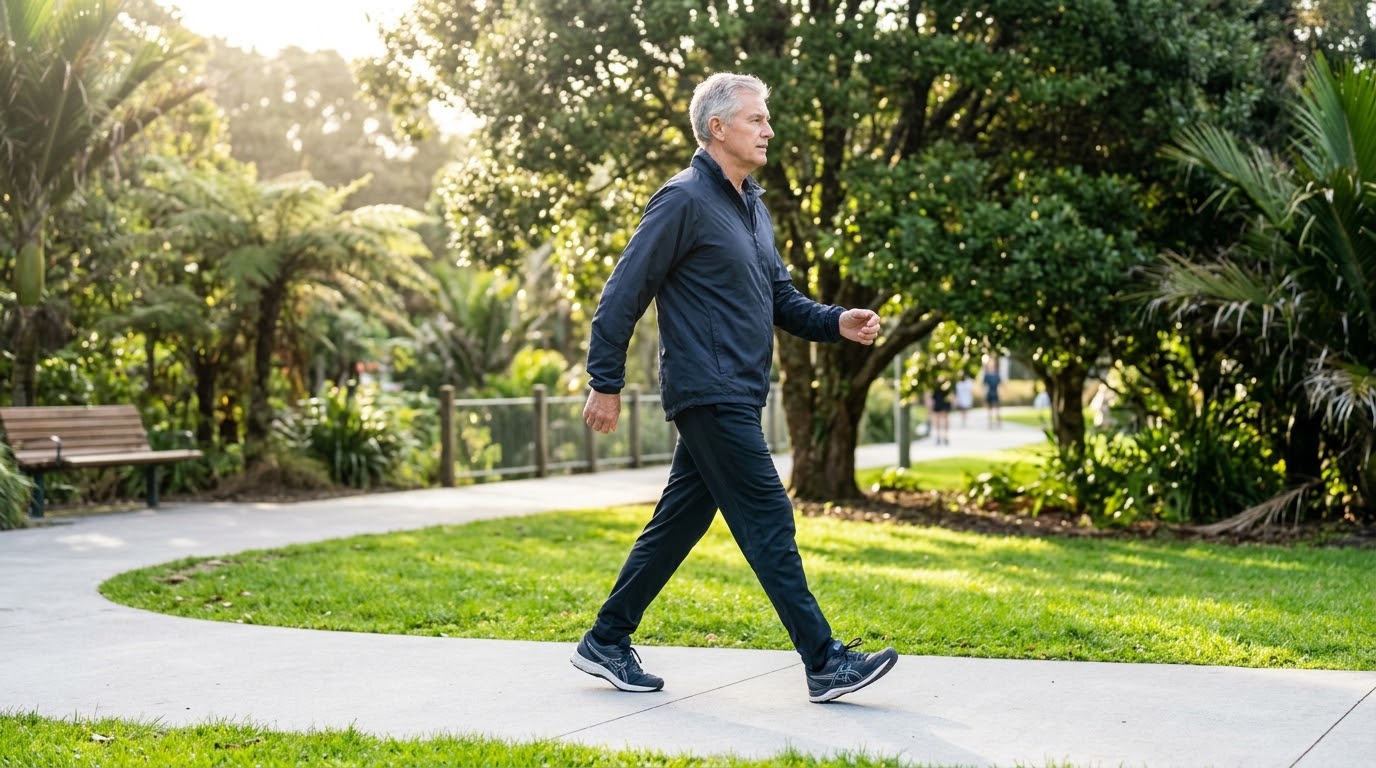
You don’t need to join an expensive gym to reclaim your mobility. You just need to walk to the “proper stop.” The most frictionless micro-habit you can build today is the 11-Line Walking Posture. Instead of shuffling your feet, consciously focus on the mechanics of your step:
- Plant your heel first.
- Roll the weight smoothly along the outer sole of your foot.
- Push off firmly with your big toe. This deliberate motion forces your legs to stay parallel (like the number 11), naturally correcting O-leg bowing, engaging your core, and taking the stress off your aging knee joints. I do this every day, even when I play a relaxed round of golf at Chamberlain Park. I don’t play to be a champion; I play to keep my spine straight.
Section 3:
Doing One Thing Different (Tips for Sustainability)
Psychotherapist Bill O’Hanlon famously wrote, Do One Thing Different. If your current pattern is to sit on the couch because your back aches slightly, break the pattern with a tiny change. You don’t have to walk five kilometers. Just stand up and practice the 11-line walk for five minutes down your hallway or to the end of your driveway. Pair it with slow, diaphragmatic breathing (inhale for 4 seconds, hold for 4, exhale for 8) to relax your autonomic nervous system and reduce the perception of pain. Never accept your condition as a fortress.
FAQ (Frequently Asked Questions)
- What if my knees already hurt when I walk? If you have severe, acute pain, consult a doctor first. However, for general age-related stiffness, the pain is often caused by poor posture and muscle weakness. Start with just two minutes of the 11-line walk. Proper alignment usually reduces knee stress over time.
- Is it too late to correct my walking posture at 65+? Not at all. I successfully corrected my own uneven shoe sole wear and O-leg habit in my sixties. The brain’s neuroplasticity allows you to rebuild neural pathways for posture at any age as long as you practice consistently.
Conclusion
Life gives us all kinds of disadvantages as our hair turns gray. That is a fact, but it is not an excuse. We must not pull the buzzer halfway through our journey and demand to be let off early. Walk the same safe distance as everyone else. Build your fundamental constitution through tiny, daily habits, and enjoy the ride properly, with your head held high and your spine straight.
Evidence & References
- The Energy Paradox by Dr. Steven Gundry: Emphasizes that movement and mitochondrial engagement are necessary to generate physical energy, breaking the cycle of age-related fatigue.
- Do One Thing Different by Bill O’Hanlon: A foundational psychological approach to breaking self-limiting patterns and excuses through tiny, actionable changes.
- Hideyuki Negoro’s Breathing Techniques: Highlights how deep, rhythmic breathing during walking stabilizes the autonomic nervous system and improves capillary blood flow to aging tissues.