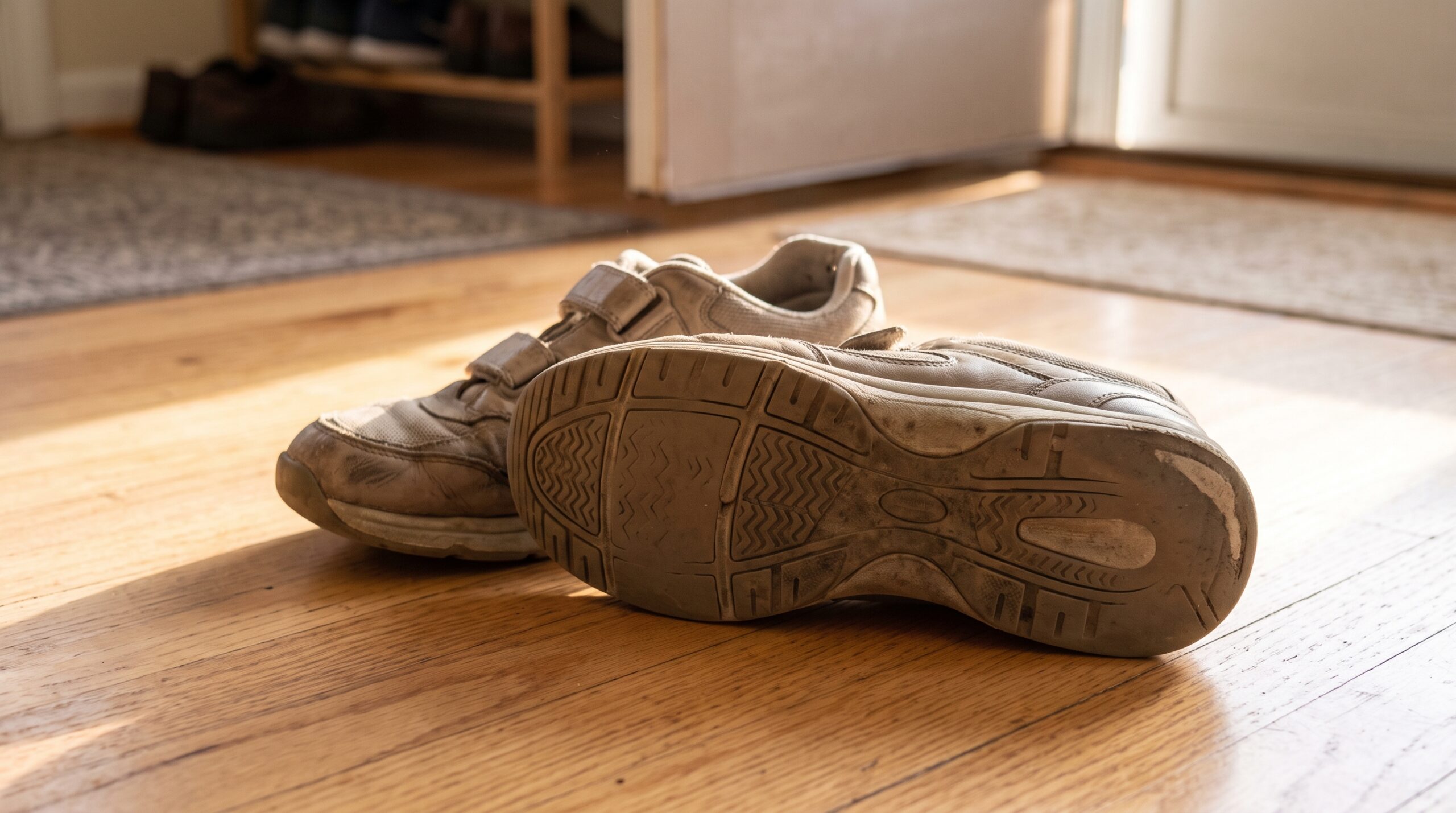
What Your Worn-Out Shoe Soles Are Telling You: Fixing the O-Shaped Gait
Have you ever watched older adults walk with a slight “O-shaped” gait, where their knees turn outward and steps look unsteady? While it is easy to blame aging, a closer look at your own shoes might reveal a surprising warning sign about your joint health.
The Hidden Meaning Behind Uneven Shoe Wear
If your shoes consistently wear out only on the outer heel within just a few months, it is rarely just a matter of poor shoe quality. Instead, it indicates that your body’s alignment and walking balance have been compromised. When your shoe soles wear down unevenly, every step tilts your ankles, knees, and hips at an unnatural angle, placing continuous strain on your joints.
Why It Happens: The Biomechanics of Aging & Gait
As core and inner thigh muscles naturally weaken over time, our bodies compensate by widening our stance and treading on the outer edges of our feet.
Much like driving a vehicle with misaligned wheel alignment, walking on unevenly worn feet causes excessive wear on your joint structures. This misalignment puts continuous, unhealthy pressure on your knees, hips, and lower back, leading to stiffness and chronic fatigue.
A Simple 3-Month Gait Reset
Correcting your gait does not require expensive equipment or exhausting workouts; it starts with conscious awareness during your daily steps.
| Technique Focus | Execution Guide | Key Benefit |
|---|---|---|
| Keep Feet Parallel | Practice walking with your feet aligned in a straight “11-shape”. | Prevents outward rotation of the knees and ankles. |
| Conscious Step-Through | Roll smoothly from the center of your heel, along the outer edge, to the big toe. | Distributes impact evenly across the foot. |
| Engage the Core | Draw your navel slightly inward to stabilize your pelvis. | Maintains upright posture and stabilizes the spinal alignment. |
Daily Steps to Practice:
- Keep Feet Parallel: Focus on walking with your feet aligned in a straight “11-shape” pattern rather than letting your toes splay outward.
- Conscious Step-Through: Land lightly on the center of your heel, roll along the outer edge of your foot, and push off firmly with your big toe.
- Engage the Core: Draw your navel slightly inward to stabilize your pelvis, allowing your knees to brush past each other gently as you move.
The Benefits of Mindful Walking
After just three months of practicing mindful gait correction, remarkable changes take place in your body:
- Chronic joint fatigue in the lower back and knees begins to disappear.
- Core stability and inner thigh muscle strength improve significantly.
- Shoe soles begin wearing down evenly across the entire surface rather than slanting outward.
Conclusion
Joint pain and a collapsing gait aren’t inevitable parts of aging—they are often a call from our bodies to correct how we move. Taking a moment to check your footing today can restore your balance, protect your joints, and keep you walking with confidence for years to come.
Frequently Asked Questions
Q1: How can I tell if my uneven shoe wear requires medical attention or if it can be fixed with gait training alone?
A: If you experience sharp, persistent pain, swelling, or joint instability in your knees, hips, or ankles, you should consult a physician or physical therapist. However, if you only feel mild stiffness or fatigue alongside uneven outer wear on your shoe soles, practicing 11-shaped parallel walking and strengthening your core and inner thigh muscles can significantly improve your gait and alignment.
Q2: How long does it take to see noticeable improvements from mindful gait correction?
A: With consistent daily practice, most people begin to feel reduced lower body fatigue and improved posture within 3 to 4 weeks. After around 3 months, you will likely notice increased muscular stability and see your shoe soles wearing down much more evenly.
Community Engagement
“What do your shoe soles look like today? Take a moment this evening to check them and share your thoughts in the comments below!”