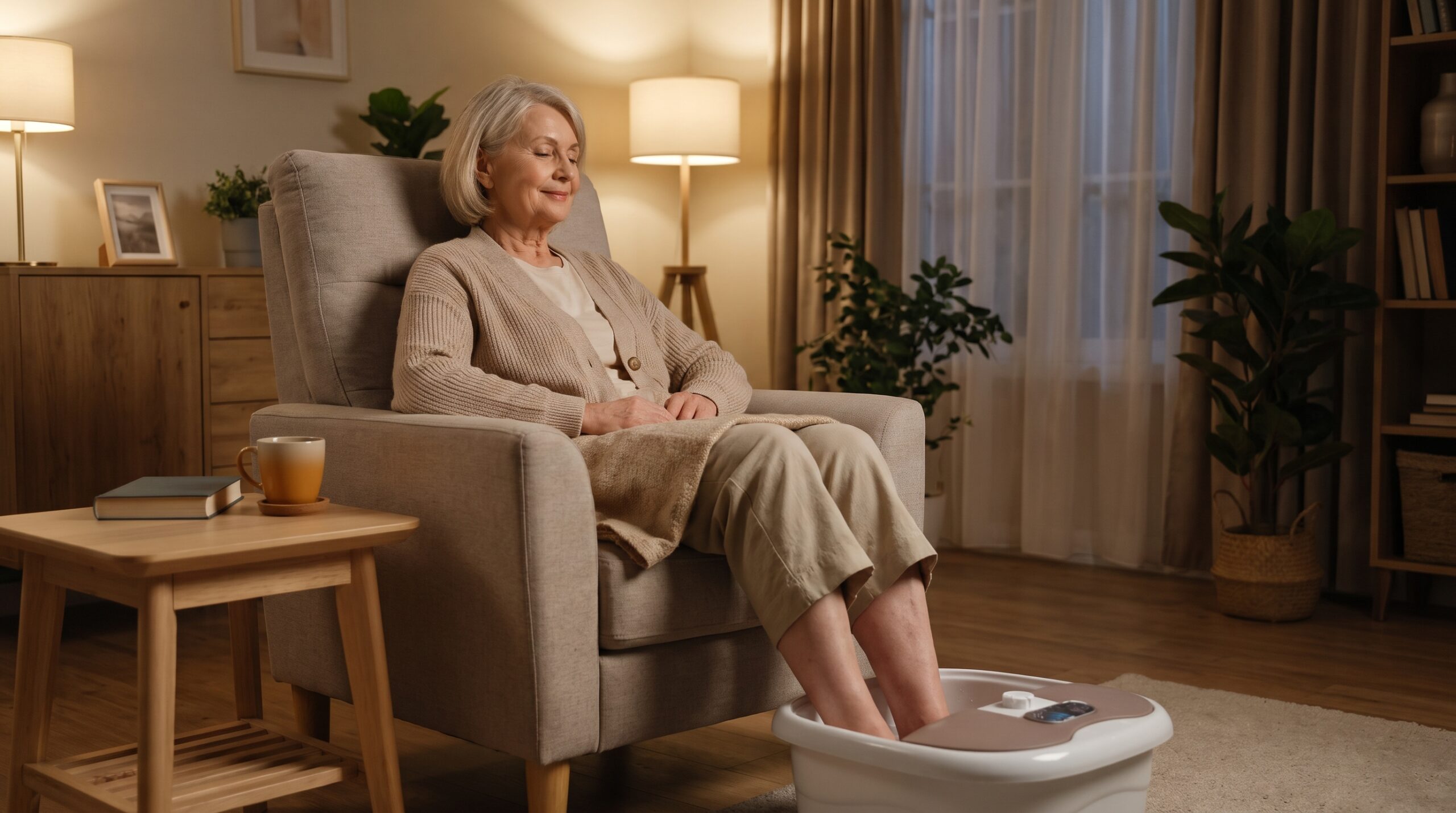
Evening Foot Soaks: Reviving Tired Legs, Peripheral Circulation and Deep Sleep
Banish tired, heavy legs and restless nights! Discover why a gentle 15-minute foot soak at 38–40°C triggers distal vasodilation, cools internal body temperature, and promotes restorative senior sleep.
Tags: Peripheral Circulation, Better Sleep for Seniors, Natural Insomnia Remedies, Restorative Evening Routine
3-Point Summary
- Aging reduces venous valve efficiency and peripheral capillary elasticity, resulting in cold feet and evening leg heaviness.
- Water exceeding 42°C triggers sympathetic arousal and raises heart rate; mild warmth at 38–40°C is the therapeutic sweet spot for seniors.
- Soaking to ankle depth for 15 to 20 minutes roughly 1–2 hours before bedtime cools core body temperature, signaling the brain to release melatonin.
Content
After a full shift navigating city traffic or walking on hard surfaces, our feet carry the silent weight of our entire body. For adults past 65, diminished venous return and stiffening peripheral vessels often leave lower legs feeling chronically swollen, aching, and icy cold by evening.
Before turning to over-the-counter sleep aids or painkillers, one of the oldest, most reliable self-care remedies is a gentle 15-minute warm water foot soak before bed.
Ⅰ. The Physiology of Foot Warming and Sleep Onset
- Distal Vasodilation: Immersion in warm water dilates constricted micro-vessels in the soles and ankles, dramatically enhancing venous return and relieving fluid pooling in the lower extremities.
- The Core Temperature Drop: The human circadian rhythm initiates sleep when internal core body temperature drops by roughly 0.5°C to 1°C. By dilating peripheral blood vessels in your feet, warm water acts as a radiator, rapidly venting heat from your body’s core. As your internal temperature gently drops post-soak, natural sleepiness follows.
- Parasympathetic Shift: Soothing warmth stimulates the vagus nerve, calming restless mind chatter and shifting your nervous system into restorative recovery mode.
Ⅱ. Debunking the Scalding Water Myth
Many believe water must be steaming hot to be effective. For older adults, water above 42°C shocks the cardiovascular system, triggering a surge of adrenaline that spikes blood pressure and awakens the brain. Keep water comfortably warm at 38°C to 40°C.
Ⅲ. 3 Practical Steps for an Evening Soak
- Water Level to Lower Calves: Fill a basin so water covers at least three inches above the inner ankle bone (submerging vital circulatory acupoints).
- Soak for 15 to 20 Minutes: Lean back in a supportive chair, breathe deeply, and keep a kettle nearby to top up warm water gently as it cools.
- Dry Thoroughly & Wear Cotton Socks: Dry thoroughly between toes and immediately slip on breathable cotton socks to trap the residual warmth.
Conclusion
Caring for the lowest, most hardworking part of your body is an act of deep personal gratitude. A small basin of warm water in the evening is all it takes to quiet the mind, release the fatigue of the day, and welcome a night of profound, peaceful rest.
Frequently Asked Questions (FAQ)
Q1. Are foot soaks safe for seniors with diabetes?
Diabetic neuropathy impairs temperature sensitivity. Always test water with a thermometer (keep below 38°C) to prevent accidental burns, and limit soaks to 10–15 minutes.
Q2. Can I add Epsom salt?
Yes, half a cup of Epsom salt (magnesium sulfate) or a drop of lavender oil enhances muscle relaxation and soothes aching joints.