Natural vs. Processed Slice Cheese and Senior Gut Health
Discover the real difference between natural cheese and processed slice cheese, how it’s made, and a simple label-reading micro-habit to protect your gut health.
Category: Sustainable Eating Tags: gut-health, micro-habits
Quick Summary:
- Natural vs. Processed: Natural cheese is simply milk, enzymes, and time; processed slice cheese is packed with artificial emulsifiers and vegetable oils that can disrupt your gut lining.
- The Aging Gut: As we age, digesting dairy proteins (like casein) becomes harder, often leading to hidden systemic inflammation and joint stiffness.
- The Label Micro-Habit: Always flip the package. If the ingredient list contains more than just milk, salt, starter culture, and enzymes, leave it on the shelf.
Introduction
Walking through the supermarket aisles here in Auckland, the dairy section is always brightly lit and endlessly long. Among the most popular items are those perfectly square, individually wrapped processed cheese slices. For someone like me who has a strict dairy allergy, I avoid this aisle entirely—cow’s milk and cheese severely trigger my gut inflammation and joint stiffness. However, I know many people enjoy cheese daily. If you are going to include cheese in your diet, understanding exactly how it is made, the drastic difference between “real” and “processed” cheese, and how our aging bodies react to it is essential for protecting your metabolic foundation.
Section 1: The Root Issue (How It’s Made & The Processed Trap)
At its core, making natural cheese is a simple, ancient process. You take milk, add a bacterial starter culture and an enzyme called rennet, and wait. The enzymes cause the milk proteins to coagulate, separating into solid curds (which become the cheese) and liquid whey. The curds are then pressed and aged.
Processed slice cheese, however, is a completely different story. It is essentially a chemical reconstruction. Manufacturers take cheap, leftover bits of various cheeses, melt them down, and heavily mix them with synthetic emulsifiers (like sodium phosphate), artificial colors, extra sodium, and sometimes vegetable oils to create a product that melts perfectly and lasts forever on a shelf. For seniors, these synthetic emulsifiers are highly problematic. They act like detergent in the digestive tract, breaking down the protective mucosal lining of our gut. Combined with the inflammatory nature of dairy proteins (casein), processed cheese can create a perfect storm for leaky gut and systemic fatigue.
Section 2: The Micro Habit (The Flip-and-Read Rule)
If you do not have a dairy allergy and choose to consume cheese, protecting your gut requires zero heavy willpower—just a slight change in your shopping routine. My micro-habit for you is the “Flip-and-Read Rule.”
Before you put any cheese into your shopping cart, flip the package over and read the ingredients. Natural cheese should only have three or four words: Milk, Salt, Starter Culture, and Enzymes. If you see a long paragraph filled with unpronounceable chemical names, gums, or emulsifiers, do not buy it. This tiny, frictionless habit ensures you are eating actual food, not an edible chemical science experiment.
Section 3: Doing One Thing Different
When we pass 65, our digestive enzymes and stomach acid naturally weaken. If you want to continue enjoying cheese, doing “one thing different” means choosing naturally aged, hard cheeses like authentic Parmigiano-Reggiano. The long aging process naturally breaks down much of the lactose and proteins, making it slightly easier to digest than soft, unaged cheeses.
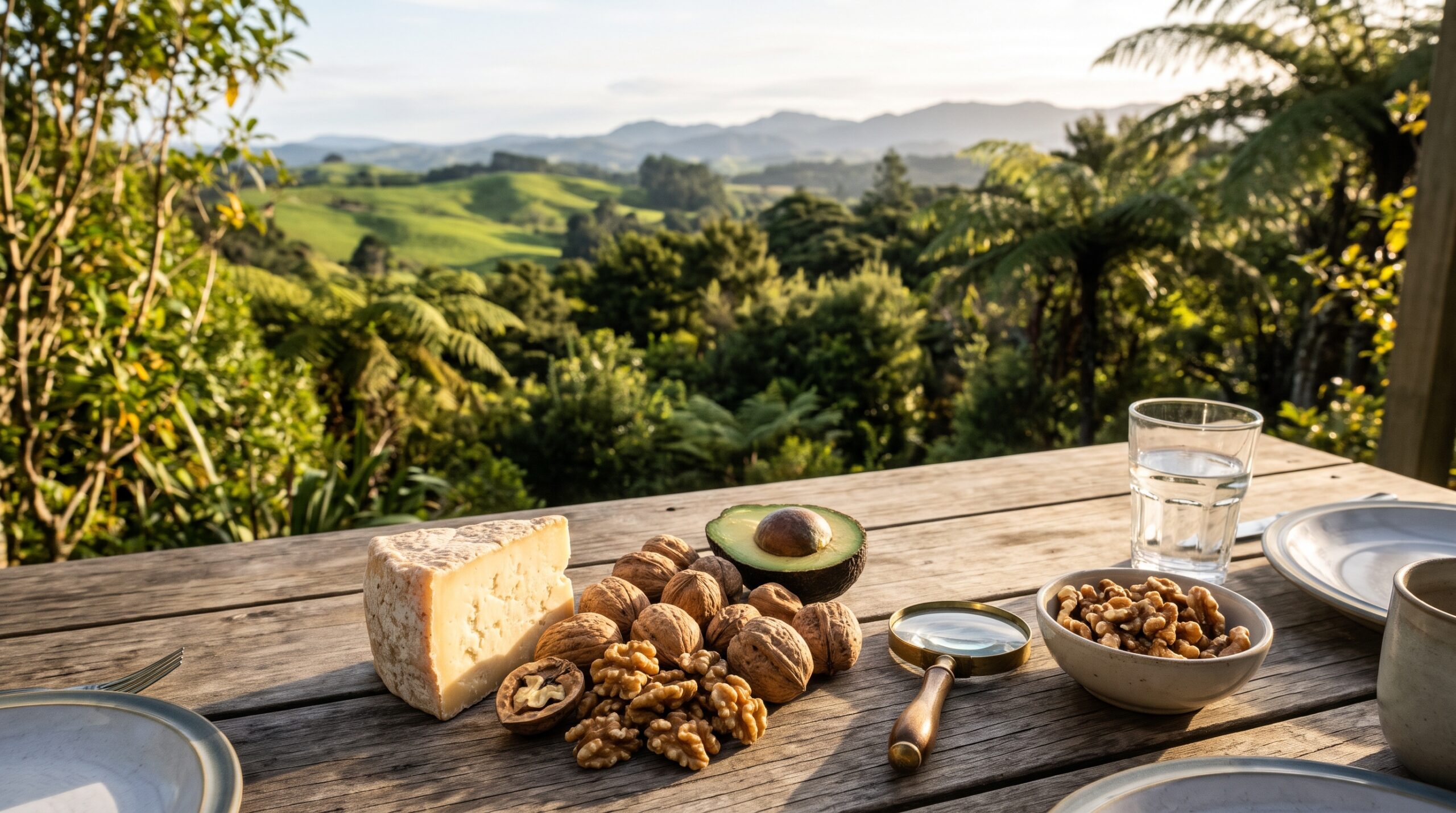
However, if you ever feel bloated, congested, or stiff after eating dairy, I highly recommend adopting my approach: swap the cheese entirely for high-quality, plant-based fats. During my 16:8 fasting window, I rely on a handful of raw walnuts or a slice of fresh avocado. These plant fats provide the rich, creamy texture and energy we crave without any of the dairy-induced inflammation.
FAQ
- Q: Are those convenient slice cheeses really that bad for my health?
- A: Yes. The artificial emulsifiers used to make them pliable and meltable have been shown to disrupt the gut microbiome. They are classified as ultra-processed foods, which severely tax a senior’s metabolic system.
- Q: I’m lactose intolerant but love cheese. What are my options?
- A: Hard, naturally aged cheeses contain very little lactose compared to milk or soft cheeses. However, if your issue is actually with the dairy protein (casein) rather than the sugar (lactose)—which is very common as we age—even aged cheese will cause inflammation. In that case, transitioning to raw nuts and plant-based fats is your safest bet.
Conclusion
Building a healthy constitution isn’t about perfectly restricting yourself; it’s about making informed, mindful choices. By simply turning over a package of cheese to read the label, or choosing to replace dairy with a handful of raw walnuts, you take a proactive step in protecting your gut lining. Aging with dignity means choosing foods that support our internal engines, ensuring we have the energy and mobility to enjoy our daily lives to the fullest.
Evidence & References
- Metabolical by Dr. Robert Lustig: Details the severe metabolic damage caused by ultra-processed foods and chemical emulsifiers found in products like processed cheese.
- The Energy Paradox by Dr. Steven R. Gundry: Highlights how Casein A1 (the primary protein in most cow’s milk and cheese) can trigger inflammation and drain systemic energy, especially in aging digestive systems.
- Your Body in Balance by Dr. Neal Barnard: Advocates for replacing inflammatory animal dairy with whole, plant-based fats to restore hormonal balance and reduce internal inflammation.