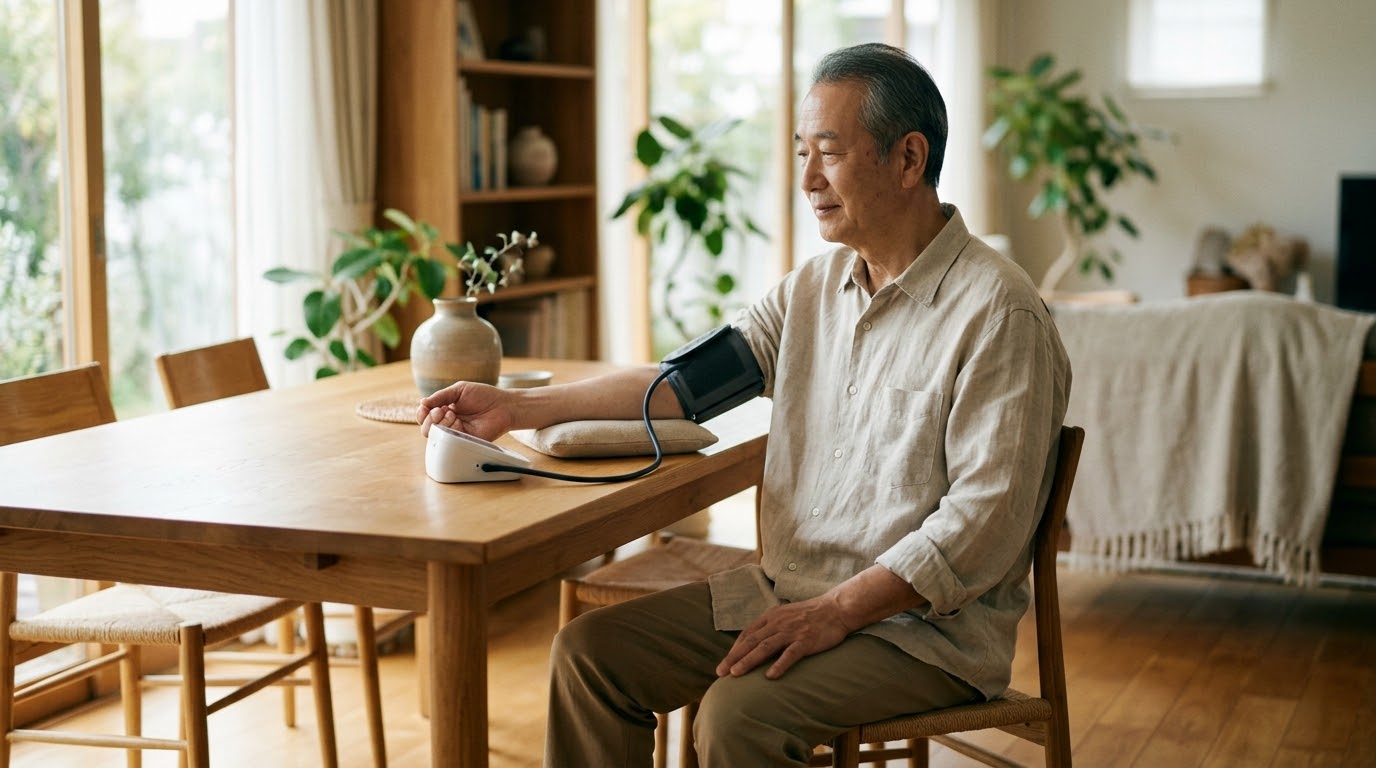
Accurate Home Blood Pressure Monitoring: Escaping White-Coat & Masked Hypertension After 65
Have you ever sat on an examination table in your doctor’s clinic only to watch the digital monitor flash 155/95 mmHg, prompting your GP to suggest increasing your medication dosage—even though you felt perfectly fine?
Conversely, you might register an immaculate 120/80 mmHg in the clinic, while your early morning readings at home spike into dangerous territory unobserved. The former is well-documented as “White-Coat Hypertension”, driven by subconscious clinical anxiety; the latter is “Masked Hypertension”, an insidious risk factor for morning strokes.
Taking true ownership of your cardiovascular health means establishing an unshakeable home baseline. A single reading taken in a sterile clinic tells only a fraction of the story; your daily morning ritual at home tells the authentic truth.
Why Home Readings Trump Clinic Checks
- Elimination of the White-Coat Reflex: Traffic, parking hassles, waiting rooms, and doctor anxiety trigger temporary surges of cortisol and adrenaline. Measuring at home captures genuine resting hemodynamics.
- Capturing the Deadly “Morning Surge”: Over 60% of cardiovascular events occur in the first few hours after waking, when blood viscosity peaks and vascular tone tightens. Clinic appointments in the afternoon completely miss this critical morning surge.
- Evaluating Real 24-Hour Drug Efficacy: Daily logs verify whether your current lifestyle or prescribed regimen maintains protection through the fragile dawn hours.
The 7 Golden Rules of Senior Home Blood Pressure
- Within 1 Hour of Waking: Before beginning physical chores or strenuous movements.
- Empty Your Bladder First: A full bladder elevates systolic pressure by up to 10–15 mmHg via sympathetic reflexes.
- Before Food & Blood Pressure Medications: Capture clean baseline numbers unaffected by post-meal digestion or pharmaceuticals.
- 5 Minutes of Silent Rest: Sit comfortably on a chair with back support, both feet flat on the floor. Never cross your legs.
- Cuff at Heart Level: Secure the upper-arm cuff snugly around your bicep, resting your forearm on a cushion at atrial height.
- Strict Silence: Avoid talking or reading alarming news while the pump inflates and deflates.
- Measure Twice, 1 Minute Apart: Discard unnecessary panic; take two readings separated by 60 seconds and record the average.
Presenting your GP with an organized, two-week morning log empowers productive healthcare partnerships, prevents overmedication, and brings profound peace of mind.
[Verified Medical References]