Why Walking to the Pedestrian Crossing is the Ultimate Micro-Habit After 65
Discover why skipping the dangerous shortcut and walking an extra 50 steps to the pedestrian crossing is a powerful daily micro-habit that protects your mobility and longevity.
- Category: Daily Posture & Core
- Tags: Micro-Habit, Walking For Health, Senior Mobility
Quick Summary
- Shift Your Perspective: Taking the “long way” to a proper traffic light isn’t a waste of time; it’s a built-in, effortless daily mobility exercise.
- Protect Your Greatest Asset: A minor bump that leaves a young person with a bruise can cost a senior their independence. Safety is the foundation of longevity.
- Boost Capillary Health: The extra 50 steps encourage light cardiovascular effort and mindful breathing, stimulating healthy blood flow without overwhelming the body.
Introduction
From my seat behind the large windshield of an Auckland city bus, I get a front-row view of how we move through life. Recently, I watched an older gentleman step off the sidewalk into the middle of a busy road, skipping the bright, safe pedestrian crossing just 50 meters away. To him, he was taking a quick, efficient shortcut. But from my vantage point, moving a 15-ton bus through traffic, he was moving in slow motion while the world rushed dangerously around him.
Many of us in our 60s and 70s fall into this trap. We think a shortcut saves time and eases the strain on our aching knees. But what if we completely flipped that mindset? What if walking those extra 50 steps to the traffic light wasn’t a burden, but a vital micro-habit that actively builds our physical constitution and protects our dignity?
1. The Root Benefit (Why This Matters After 65)
As we age, our bodies lose the mechanical resilience we once took for granted. A young person might survive a gentle bump from a braking car with a scraped knee, but for a senior, that same minor impact can mean a shattered hip, months of bed rest, and a permanent loss of independence.
But there is a deeper physiological benefit to taking the longer, safer route. When we incorporate tiny, frictionless moments of movement into our day—like walking slightly further to a designated crossing—we gently engage our core and leg muscles. More importantly, this light, rhythmic movement naturally deepens our breath. According to Dr. Hideyuki Negoro’s principles on the autonomic nervous system, these short bursts of calm, deliberate movement combined with deep breathing expand our capillaries. This delivers fresh oxygen and vital nutrients to our cells, reducing systemic inflammation without the need for an exhausting gym workout.
2. The Micro Habit (The Practical Daily Action)
The core philosophy of a micro-habit is that it requires almost zero willpower. You do not need to put on running shoes or buy a gym membership.
The Habit: Every time you need to cross a road, actively seek out the nearest pedestrian crossing with a traffic light, even if it is out of your way.
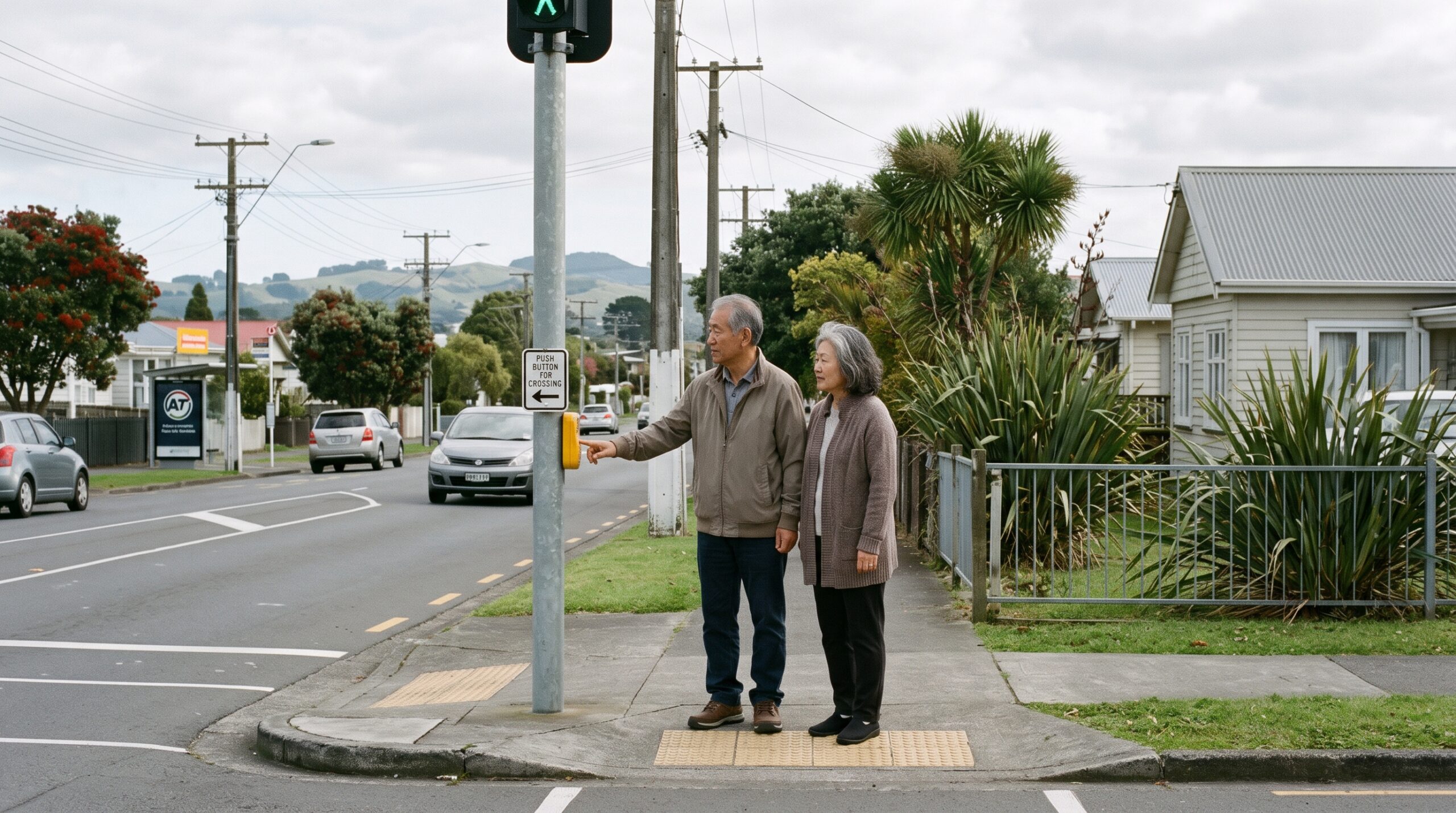
Treat those extra 50 or 100 steps not as an inconvenience, but as your daily physical therapy. When you push the button and wait for the green light, take a moment to stand tall, align your posture (the 11-line stance), and take three deep, slow diaphragmatic breaths. You are transforming a mundane wait into a moment of active health restoration.
3. Doing One Thing Different (Tips for Sustainability)
We often think that aging means we deserve a special “bubble of protection” from the world, leading us to walk into traffic expecting cars to automatically yield. To change this pattern, we only need to do one thing different: reframe the wait.
- Ditch the Urgency: Remind yourself that you have earned the right to move slowly and safely. Let the distracted, stressed younger drivers wait at the red light while you cross with dignity.
- Use Proper Footwear: Always wear firm-soled shoes when running errands. Soft, oversized shoes destabilize your balance and make extra walking feel like a chore.
- Breathe at the Light: Use the 30 seconds it takes for the light to change to practice 4-4-8 breathing. Inhale for 4 seconds, hold for 4, and exhale slowly for 8. It turns waiting into a restorative practice.
FAQ (Frequently Asked Questions)
Q: My knees hurt when I walk too much. Isn’t it better to take the shortest route possible?
A: While chronic joint pain is difficult, completely avoiding movement accelerates muscle loss around the joint, making the pain worse over time. Walking just 50 extra steps to a safe crossing provides gentle, necessary lubrication to the joints without overloading them. It is far safer than the sudden, jerky movements required when dodging traffic on a shortcut.
Q: Drivers are so distracted these days; is a pedestrian crossing actually safer?
A: Absolutely. While distracted driving is a real danger, a designated crossing forces a change in the traffic pattern. Traffic lights command attention that a person unexpectedly stepping into the middle of the road does not. By using the crossing, you take control of the environment rather than gambling your life on a driver looking up from their phone in time.
Conclusion
Your health and independence are your greatest wealth. We spend so much energy on our diets, our supplements, and our doctors’ visits—why risk throwing it all away on a dangerous street corner just to save two minutes? Walking to the crossing is not just about obeying the law. It is a powerful, daily micro-habit that protects your body, improves your capillary circulation, and ensures you age with the dignity and grace you deserve. Take the long way. Your body will thank you.
Evidence & References
- The Autonomic Nervous System & Capillary Health: Concepts based on Dr. Hideyuki Negoro’s research, demonstrating that gentle, rhythmic daily movement paired with deep breathing optimizes capillary blood flow and balances the nervous system.
- Micro-Habits for Longevity: Grounded in the behavioral psychology principle that tiny, frictionless daily choices (like walking extra steps to a crossing) compound into significant long-term health benefits (supported by Bill O’Hanlon’s Do One Thing Different).
- Senior Injury Prevention: General medical consensus confirms that the severity of injuries from low-impact collisions drastically increases with age due to decreased bone density and muscle mass, emphasizing prevention as the best medicine.